


AI-Powered On-Page SEO: Smarter Meta Tags, Headings, and Internal Links
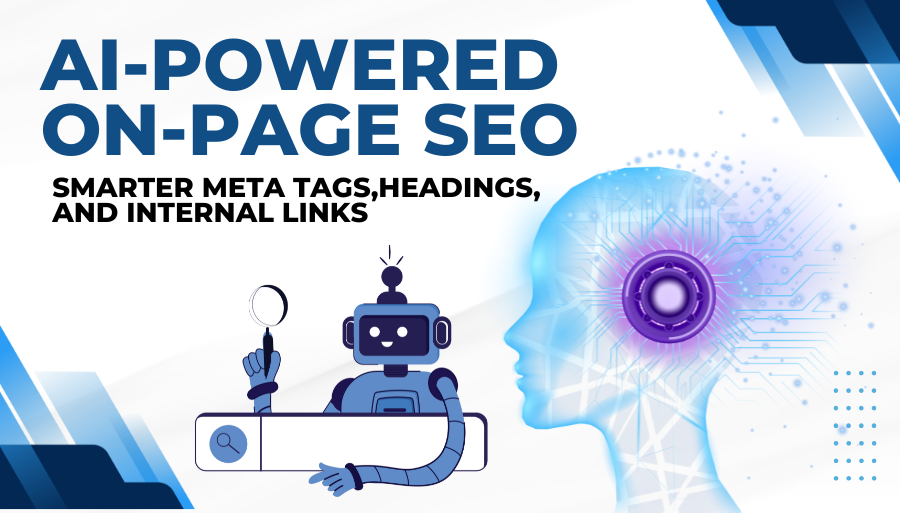
AI-powered on-page SEO is changing how websites interact with search engines. SEO experts stop guessing when they combine strong AI SEO optimization with human insight. They tweak every element—meta tags, headings, internal links—based on data-driven signals. This is on-page SEO with a boost from AI optimization, not a replacement. And that shift matters. Here is what you should know.
Why is AI Now the Brain Behind On-Page SEO?
Search used to be trial and error. Now, artificial intelligence in SEO steps in. It processes SERP patterns at scale and spots winning strategies instantly. It looks at click rates, dwell time, session length, and even scroll depth. It doesn’t just locate keywords—it understands intent.
Systems refresh their learning constantly. If search behaviour changes overnight, AI notices and adapts. That kind of flexibility was impossible before. And humans remain in control. We interpret and apply AI suggestions with expertise.
This depth lifts the quality of on-page SEO. We no longer guess what works; we know.
Meta Tags Are Getting Smarter, Not Just Shorter
Meta tags used to be a tight keyword crunch. Now, AI writes them. It examines search intent, phrasing trends, and sentiment. That makes titles and descriptions feel natural. They connect better with users and algorithms alike.
Instead of punting a rigid 60-character limit, AI focuses on capturing user mindset. It shifts tags toward conversational tone and context. And its recommendations get refined as the search evolves.
That is genuine on-page SEO with AI—smart, adaptive, and relevant.
Headings: Structure for Real Readers
Headings used to be all about SEO structure. Now, they work for people, too. AI tools pull from questions users ask and answers from top-ranking content. That shapes H1, H2, and H3 tags into a logical flow. It matches actual search terms and expectations.
They guide readers—helping them find answers quickly. That improves dwell time and reduces bounce. It also allows crawlers to navigate your content. AI analysis uncovers hidden subtopics and suggests headings to cover them.
This approach is more natural and helpful than stuffing keywords.
Internal Linking Isn’t Just a Manual Task Anymore
We used to add internal links manually. Now, AI spots hidden connections. It clusters related topics and proposes links automatically. That improves the topical depth and page authority distribution.
It can suggest anchor text too—phrase patterns that match user queries. That strengthens the site structure without specialists combing through pages.
SEO experts still review and approve. AI just surfaces powerful opportunities they’d miss.
What AI Still Can’t Do (Yet)
AI is brilliant at patterns and scale. But the brand tone remains human. AI might offer a bland heading that fits the structure but lacks personality or a link suggestion that doesn’t match page intent. That falls back to human judgement.
SEO experts still craft voice, humour, and phrasing nuance. AI suggests, and the SEO experts choose. Moreover, SEO specialists spot context misfires. That keeps a brand consistent.
Free AI SEO Tool That Actually Works
You don’t need expensive software to apply AI for SEO optimisation. Here are some practical selections:
- Google Search Console’s Performance Report: Suggests title and description changes for underperforming pages.
- AnswerThePublic (free tier): Reveals user questions that inform smarter headings.
- Ubersuggest: Offers basic AI-powered title tag and meta description ideas.
- Markdown Link Suggestions by Screaming Frog: Suggests internal linking based on content relevance.
These are decent and free AI tools. Note that they will not handle everything. You’ll need judgement over tone, phrasing, and context, but they save time. That’s balanced AI SEO optimization.
On-Page SEO Checklist — Now With AI
Here’s a modern on-page SEO checklist infused with AI:
- Audit pages for poor CTR or dwell time via Search Console.
- Use AI suggestions to rewrite meta tags around intent.
- Use question tools to craft headings that match user queries.
- Analyse content gaps. AI suggests missing subheadings.
- Use AI tools to propose relevant internal links.
- Review content quality—tone, brand alignment, context.
- Update pages and monitor performance changes.
Most of these were manual once. AI now speeds them up. But human review remains vital. SEO experts balance scale with nuance to protect brand voice, clarity, and specificity.
Don’t Forget Off-Page Tactics
Off-page SEO techniques remain essential. External links, social shares, citations—they drive signals AI can’t capture. On-page optimisation improves your site, and off-page earns trust and authority.
Think of AI and traditional SEO as two sides of the same coin. On-page sets the stage, while off-page brings the spotlight.
Final Words
Modern SEO needs both data and judgment. AI-powered SEO gives speed and insight. Most SEO specialists rely on AI search optimization to uncover what works. Then we bring in human vision—brand tone, nuance, context. That crossover creates on-page work that engages readers and performs in search.
Meta tags get smarter, headings align with real queries, and internal links connect content more wisely. But humans still shape the voice.
Combine strong off-page SEO techniques and you’re covering both ends of search success. That’s where AI meets expertise.
You’re no longer guessing; you’re building pages that satisfy users—and algorithms—every time.
FAQ’s
How does Arihant Webtech use AI SEO optimization to improve -page elements?
Arihant Webtech blends data from AI tools with page performance metrics. We use AI to suggest meta tag improvements, align headings with user intent, and propose internal links. Then, we tailor those suggestions to fit the brand tone and messaging.
Can Arihant Webtech help with AI-powered on-page SEO using free AI SEO tools?
Arihant Webtech uses free AI SEO tools to kickstart rewriting meta tags and headings. Then, we refine suggestions, ensuring they match your voice and goals. This saves time and maximises value—without extra software cost.
What are the best free AI tools for SEO that work well for internal linking?
Free AI tools for SEO usually suggest internal links based on semantic relevance. They scan content clusters and identify the prominent on-page SEO factors. Use those suggestions to improve navigation and topical depth.
How does AI SEO optimization affect your on-page SEO checklist?
AI adds precision and scale. Instead of manually auditing meta tags or headings, AI highlights underperformers and suggests replacements. That tightens your on-page SEO checklist and gives you time to focus on content quality and brand voice.
Why should AI for website optimization be combined with off-page SEO techniques?
AI for website optimization sharpens on-page elements. But external authority comes from off-page SEO techniques like link building and social engagement. You need both to rank well and earn trust.

